

Beyond the Rhetoric: What Iran's Oil-Export Shock Really Reveals
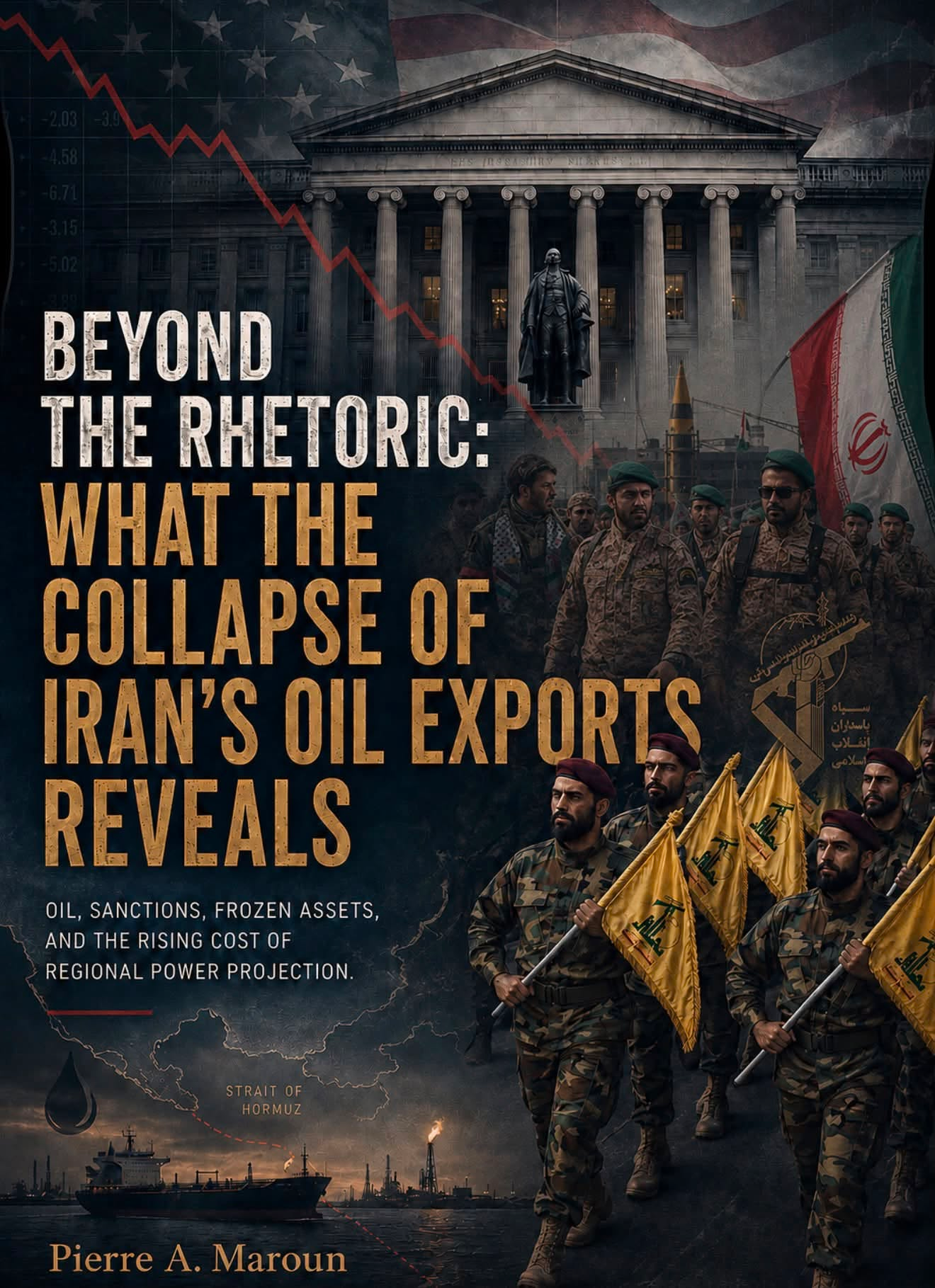
Beyond the Rhetoric: What Iran's Oil-Export Shock Really Reveals
Iran's collapsing oil exports through the Strait of Hormuz are not a technical fluctuation or a temporary logistical setback. They are a direct hit to the structural foundation on which the Islamic Republic has built its regional power for two decades. When resources fall this sharply, the question is no longer how much pressure Iran can absorb but what the regime considers untouchable—and what it is willing to sacrifice when the margins tighten.
Central Bank governor Abdolnaser Hemmati's claim that Iran is "not exporting oil" is not an accounting statement. It is an admission. Shadow flows still exist, and opaque shipping makes precise measurement difficult, but the core reality is unmistakable: Iran's ability to convert oil into usable, regime-controlled revenue has suffered an extraordinary blow.
The data explains why he said it.
Kpler tanker tracking shows crude flows through Hormuz dropping from roughly 1.545 million barrels per day in late June to about 46,800 bpd in mid-August—a collapse of nearly 97 percent. Not a gradual contraction. A direct strike on Iran's primary financial artery.
China — the anchor of Iran's sanctions-era oil trade — shows the same pattern. Different estimates vary by cutoff dates and tracking methods, but the direction is identical: Iranian offers to Chinese buyers have plunged, and Chinese intake is running at a fraction of its 2025 average. Rebuilding that flow is now one of the most consequential variables in Iran's near-term stability.
Diplomacy did not stop the slide. The Islamabad Memorandum—a 14-point framework covering the naval blockade, Hormuz passage, oil waivers, frozen assets, sanctions relief, and nuclear issues—unraveled before it produced anything durable. Trump declared the ceasefire over. Tehran accused Washington of failing to implement commitments. Pakistan claimed an extension existed; Iran denied it. Washington rejected it. Whatever version one accepts, the outcome is identical: the framework never delivered.
Hemmati says the funds Iran expected under that memorandum remain inaccessible. Iranian officials floated multibillion-dollar release figures, none independently verified. What is certain, in Hemmati's own words: the money has not arrived.
So Iran is being squeezed from two sides—sharply reduced oil flows and frozen assets still out of reach. Years of sanctions-evasion networks can soften scarcity. They cannot erase it.
For two decades, Iran's regional model has required simultaneous financing of domestic stability, missile and drone development, deterrence, foreign partners, sanctions-evasion channels, and the political machinery of the "axis of resistance." In times of abundance, these appear as one coherent strategy. Scarcity exposes the competition between them.
The regime's spending patterns offer clues. U.S. Treasury officials say Iran sent roughly $1 billion to Hezbollah in the first ten months of 2025, despite intense domestic pressure. Reuters later reported Tehran had promised additional funds if frozen assets were released. This is not discretionary spending. It is a red line.
Other partners are less dependent. Treasury estimates Houthi illicit oil sales exceed $2 billion annually. Iran-aligned networks in Iraq run their own financing operations. Sustained scarcity may push Tehran toward a two-tier system: protect what is essential and let the rest improvise.
Retrenchment will not announce itself loudly. It will appear in uneven funding, slower weapons replenishment, heavier reliance on local financing, and projects postponed rather than cancelled.
This brings us to a question Washington has never settled in a single, coherent voice: does it want to change the regime's behavior, or is the pressure now aimed at the regime's survival itself? American rhetoric has swung between the two. Trump denied regime change was ever the war's goal, then urged Iranians to "take back their country," before later claiming that "regime change has already happened" following the killing of senior commanders—even as the core political and security architecture of the Islamic Republic remained intact. On August 20, Treasury Secretary Scott Bessent went further, describing the combined blockade and sanctions as a "one-two punch" aimed at the regime's collapse.
That shift changes the real question. It is no longer simply whether Washington wants the regime gone—it is what Washington wants left standing afterward. Does it have a vision that prevents the regime's fall from becoming the unraveling of the Iranian state itself, or a wider destabilization of the region's sectarian balance? Or does the clarity of the pressure campaign's goal still lack any matching clarity about the day after? The financial campaign may be clear about what it wants to tear down. It has not yet shown, with the same clarity, what it wants to build in its place.
Washington is striking both ends of the pipeline. The same day, Treasury re-designated Hezbollah as acting "in service to the Iranian regime" under IRGC-Qods Force direction and sanctioned ten individuals running a cross-border cash network for the group. A hit to the source and a hit to the distribution system—simultaneously.
Iran is not collapsing. It retains missiles, armed partners, geography, and the ability to threaten, retaliate, and adapt. But the decisive phase may lie ahead. If pressure persists, how Iran allocates its remaining resources will reveal more about its true priorities than any official statement.
The real measure of this oil shock was never the number of barrels lost. It is what Tehran chooses to protect when it can no longer protect everything at once.
Researcher and Strategic Analyst
President, Shields of United Lebanon—SOUL